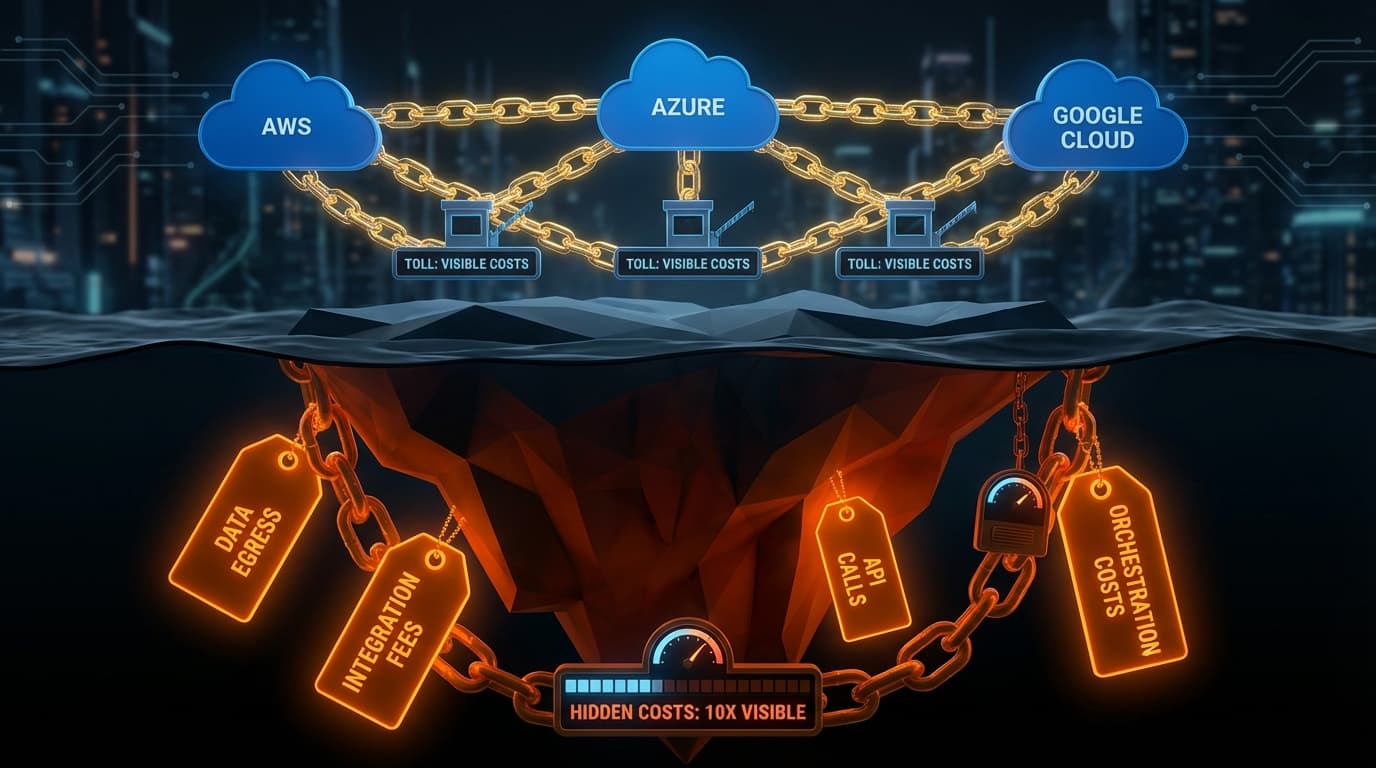
Multi-cloud strategies promise flexibility, avoid vendor lock-in, and optimize costs. But after helping enterprises navigate their cloud journeys, we've seen the hidden costs that marketing materials conveniently omit. Here's what you need to know before committing to multi-cloud.
The Multi-Cloud Promise vs Reality
On paper, multi-cloud sounds perfect: use AWS for compute, Azure for enterprise integrations, and Google Cloud for analytics. Best of all worlds, right?
The reality is more complex. While multi-cloud can deliver strategic value, it often comes with unexpected costs that erode the promised benefits.
Hidden Cost #1: Skills Multiplication
Each cloud platform requires specialized expertise. AWS networking works differently from Azure networking. GCP's IAM model differs from both. Your team now needs three times the knowledge—or you need three specialized teams.
The impact: Training costs increase 2-3x. Hiring becomes harder. Staff turnover hits harder when specialists leave.
Hidden Cost #2: Integration Complexity
Data flowing between clouds incurs egress charges—often the largest surprise on cloud bills. But the real cost is the engineering effort to build and maintain cross-cloud integrations.
The impact: Integration projects that should take weeks stretch into months. Every cloud update potentially breaks your custom connections.
Hidden Cost #3: Security and Compliance Overhead
Each cloud has different security models, compliance certifications, and audit requirements. Managing security across multiple platforms means multiple policies, multiple tools, and multiple potential gaps.
The impact: Security team workload doubles or triples. Compliance audits become significantly more complex and expensive.
Hidden Cost #4: Operational Fragmentation
Monitoring, logging, incident response, and deployment pipelines must work across all platforms. Native tools don't talk to each other, forcing you to invest in multi-cloud management platforms.
The impact: Third-party tools add €50,000-€200,000 annually. Custom tooling requires dedicated engineering effort.
Hidden Cost #5: Lost Volume Discounts
Splitting workloads across providers means you qualify for fewer committed-use discounts. That 30% savings from reserved instances? You might only capture 10-15% across fragmented spending.
The impact: 15-20% higher effective cloud costs compared to consolidated spending with one provider.
When Multi-Cloud Actually Makes Sense
Despite these costs, multi-cloud is the right choice for some organizations:
- Regulatory requirements: Data sovereignty laws mandate specific providers in certain regions
- M&A situations: Acquired companies run on different clouds
- Specific capabilities: One provider has unique services you genuinely need
- Negotiating leverage: Credible multi-cloud capability improves contract terms
A More Pragmatic Approach
Instead of true multi-cloud, consider:
- Primary + edge: One primary cloud with limited use of others for specific needs
- Cloud-agnostic architecture: Containers and Kubernetes reduce lock-in without full multi-cloud
- Hybrid cloud: On-premises + one cloud provider often delivers better value
Making the Right Decision
Multi-cloud isn't inherently bad—it's about making an informed decision. Calculate the true total cost, including the hidden expenses we've outlined. Often, the flexibility benefits don't outweigh the complexity costs.
Need help evaluating your cloud strategy? Our team can provide an objective assessment of your options.